
Greenwashing, Meet the EU’s Newest Legislation.
The EU's new rules put hotel greenwashing on notice. "Green" and "eco-friendly" now need proof, and someone will actually be checking.
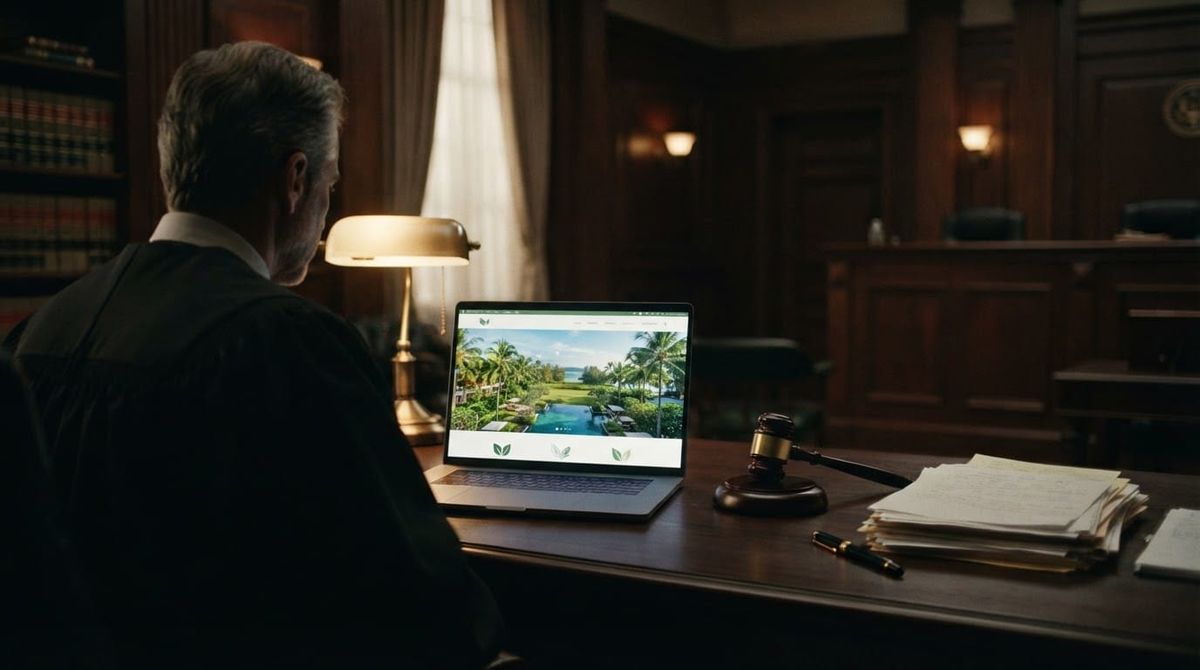
The EU’s new rules on green claims just made the sustainability checkbox a lot harder to tick.
In The Sustainability Question With Four Right Answers, I wrote that nobody has ever called to check what a hotel ticks on a sustainability questionnaire, and that nobody was ever going to. Turns out that from now on, someone will actually be checking.
On 27 September 2026, the EU’s Empowering Consumers for the Green Transition Directive (2024/825) started to apply. Member states had until March to write it into national law. It amends the EU’s rules on unfair commercial practices, and it goes straight after the vocabulary hospitality has leaned on for a decade: green. Eco-friendly. Sustainable. Responsible.
Your hotel isn’t in Europe? Nice try.
The rules apply to commercial practices aimed at EU consumers. A hotel in Dubai or Bali that markets to European guests through its own website, its OTA listings, its newsletters and its brand pages is not standing outside this. The question is not where the building is. It’s who the claim is talking to. (I’m not a lawyer, so ask yours how this applies to your source markets.)
Put your money where your mouth is
Generic environmental claims are prohibited unless the trader can demonstrate recognised excellent environmental performance, the kind a scheme like the EU Ecolabel certifies. “Environmentally friendly,” “green,” “ecological,” “eco-sustainable” are the textbook examples. The recitals add “sustainable,” “responsible” and “conscious” to that family.
It’s not a ban on talking about the environment. Context matters: a claim that comes with a clear, specific explanation next to it can stop being generic. “Sustainable hotel” alone is a problem. “We cut energy use per occupied room by X after replacing our chillers in 2025” is a sentence.
Two more pieces matter for hotels. Claims about the future need clear, public commitments with an implementation plan and time-bound targets behind them, so “net zero by 2050” with nothing underneath is now a risk. And sustainability labels that aren’t based on a certification scheme are in the firing line, which should worry anyone with a homemade “eco stay” badge on the booking page.
Your website is Exhibit A.
Think of the laminated card next to the straw in The Sustainable Hotel: “our commitment to the environment.” No number, no method, no proof. That card is exactly what this directive was written to catch.
It’s the same split I wrote about in Sustainability Has A Budget Line: symbolic versus substantive. The marketing-funded initiative is cheap to announce and impossible to prove. The capex-funded one, the chiller replacement, the insulation, the waste system, has a utility bill behind it. For years only the first one got to the headlines. Now the first one needs the second one’s evidence.
So now the person who wrote “sustainable” on the website needs a number from engineering to defend it.
Prove it or delete it.
Search your website, OTA listings and brand pages for the words green, eco, sustainable, responsible and conscious. For every hit, ask three questions. What exactly is the claim? How is it achieved? Where is the proof, and is it sitting next to the claim? If you can’t answer all three, rewrite it or delete it before someone else asks.
For years, the sustainability checkbox was the easiest box in hospitality to tick. Not anymore...
xoxo, Bored Hotelier 😉
Sources:
McCann FitzGerald - The European Union (Empowering Consumers for the Green Transition) Regulations 2026; COS Law - Environmental claims after 27 September 2026; PwC Italy - Greenwashing, the European crackdown; Reusch Law - Environmental claims under the EmpCo Directive (EU) 2024/825
FAQs
What is the EU Empowering Consumers for the Green Transition Directive? Directive (EU) 2024/825, a law that amends EU unfair commercial practices rules to stop misleading environmental claims. Member states had to transpose it by March 2026, and the rules apply from 27 September 2026.
Does the EU green claims rule apply to hotels outside Europe? The test is who the marketing is aimed at, not where the property is. A hotel that markets to EU consumers through its website, OTA listings or newsletters should treat its claims as in scope. Check with legal counsel for your specific markets.
Which words can hotels no longer use? Generic claims such as “green,” “eco-friendly,” “environmentally friendly,” “ecological” and “sustainable” are prohibited unless the hotel can demonstrate recognized excellent environmental performance. They are not banned outright if a clear, specific explanation sits alongside the claim.
Is this the same as the EU Green Claims Directive? No. Some articles use that name for the 2024/825 directive, but the separate Green Claims Directive proposal was still under negotiation in the sources I checked. Directive 2024/825 is the one that applies from 27 September 2026.
Do hotels have to explain every green claim on their website, or just have the answer ready if someone asks? Having it ready is not enough. If a claim would otherwise count as generic, the explanation has to appear clearly and prominently on the same medium as the claim, not only when someone asks. It doesn’t have to be an essay. One specific sentence next to the claim can do the job, such as “we cut energy use per occupied room by X after replacing our chillers in 2025.” The evidence behind it should also be on file. Each channel is its own medium, so a claim on an OTA listing or in a newsletter should carry its explanation there too. Whether a link to a separate page is enough is a question for your legal counsel.


Comments ()